[Series: Investing in Notaphily. Article No. 1]
In a world where cryptocurrency volatility and traditional stock market instability force investors to seek real value, notaphily has transformed from a niche hobby into a full-fledged class of alternative investments. Today, banknotes are viewed not just as historical artifacts, but as strategic assets with low correlation to public markets.
The Foundation of Value: Scarcity and Material Evolution
The investment appeal of collectible currency is based on the iron law of the market: limited supply versus growing demand. Unlike gold, the volume of which can theoretically increase through mining, the number of banknotes of a specific series or year of issue is absolutely fixed. While classic notaphily is associated with paper, the real breakthrough of recent decades has been polymer. Modern collectors increasingly view plastic money as an object of capitalization. Polymer banknotes, thanks to their durability and complex security technologies, preserve their collectible condition better over decades. Rare commemorative polymer issues released in limited editions demonstrate impressive price growth dynamics as early as the first years after issuance. A key factor in capitalization remains grading—a professional assessment on a 70-point scale (e.g., PMG). The difference between a banknote in AU 58 condition and Gem Uncirculated EPQ 66 can represent hundreds of percent in value.
The "Banknote of the Year" Case: How $100 Turns into Capital
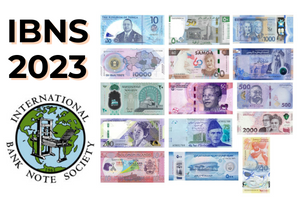
It is a mistake to believe that investing in antiques is only accessible to millionaires. The notaphily market is democratic: the entry threshold for promising specimens starts at 4,000 – 5,000 UAH (about $100). The key is not the amount, but the accurate choice of a specimen based on expert forecasts. Take, for example, the 200 Guilders of Curaçao and Sint Maarten. This banknote, which I had the honor to nominate for the International Bank Note Society (IBNS) competition and which subsequently won the "Banknote of the Year" title, is currently available for purchase. However, its market destiny is predictable: in 5 years, such specimens in perfect UNC condition will settle into private collections. When the supply vanishes from the open market, its price could double, yielding a 100% return on invested capital. This is precisely the case where professional expertise at the start allows one to outpace mass demand.
Market Dynamics and Entry Points
Historically, the market for rare banknotes demonstrates stable growth, adding an average of 7–12% per year. This reliably hedges against inflation risks and protects capital from the devaluation of fiat currencies. For a novice investor, it is critically important to find a reliable guide in this market. Expert platforms, such as the World Banknote Store, provide access to selected specimens with guaranteed authenticity. This avoids the risk of purchasing counterfeits or covertly restored banknotes, which is critical for maintaining the investment appeal of the portfolio.
Portfolio Strategy and Liquidity
A professional approach to investing in notaphily requires adherence to three basic principles:
-
High Quality Threshold: It is better to own one banknote in exceptional condition than a hundred cheap specimens with defects.
-
Planning Horizon: The optimal investment term is 5–10 years. This allows the asset to move through market cycles and become a true rarity.
-
Thematic Diversification: The portfolio should include both "eternal classics" (e.g., large-size US Dollars) and promising assets (rare polymer issues). The issue of liquidity in 2026 is solved more easily than ever. In addition to major auction houses, global marketplaces like eBay provide access to millions of potential buyers worldwide. Converting a collectible asset into cash becomes merely a matter of time and correct lot positioning.
Verdict for the Investor
Banknote collecting is an intellectual form of capital preservation. It is an asset that does not depend on central bank decisions or corporate quarterly reports. For a private investor seeking stability and the aesthetic pleasure of owning a piece of history, notaphily offers a unique combination of cultural value and financial pragmatism. In a digitizing world, a tangible asset in your safe becomes an increasingly strong argument for financial security.
Vitalii Cherniuk
Chief Executive Officer
World Banknote Store
Next in the Series: Investment Practice
Theory is only the foundation. In the next article, we will break down the "Investment Portfolio 2026: TOP 10 Banknotes with 100% Growth Potential."