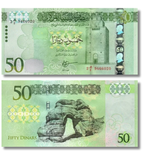

On March 20, 2025, the Central Bank of Libya (CBL) issued a unique 20-dinar banknote made of polymer — the second issue of this denomination. It entered circulation on March 24, 2025, alongside the existing paper versions, marking an important step in the modernization of Libyan currency. Produced by De La Rue on a Safeguard polymer base, this note impresses not only with its design but also with its security technologies. In this article, we will take a detailed look at this new release and add some fascinating facts about Libya and its currency that will surprise even seasoned numismatists!
20 Dinars (B553): Tan Beauty with a Historical Soul
This 20-dinar banknote stands out with its rich color palette — tan (beige), brown, and red harmoniously blend, creating a warm yet majestic appearance. The front, inscribed in Arabic, features a school in Ghadames — an ancient city known as the "Pearl of the Desert." Ghadames, listed as a UNESCO World Heritage site, is renowned for its unique mud-brick architecture and labyrinthine streets that have protected residents from the Sahara’s heat for centuries. The design is complemented by a star and crescent moon in SPARK technology — a security feature that shimmers and changes depending on the viewing angle.
The back, with English text, showcases the Al-Ateeq Mosque in Oujlah — another symbol of Libya’s rich history. Though less famous than the tourist attractions of Tripoli or Sabratha, this mosque is an important part of the cultural heritage of the Kufra oasis. The star and crescent reappear as a SPARK element, adding symmetry to the design. The banknote measures 148 x 75 mm and is made of durable, modern Safeguard polymer, promising longevity even in the harsh desert climate.
The security features are no less impressive: a holographic stripe with SPOTLIGHT, PUREIMAGE, and DEPTH technologies features Omar Mukhtar — the legendary hero of Libyan resistance against Italian colonization. His face, appearing in the hologram, serves as a reminder of the fight for freedom that still resonates in the hearts of Libyans. There’s also a simulated solid security thread with demetalized "20," though traditional watermarks are absent — the polymer base sets its own rules. Signed by Belqasem, the note was released on March 24, 2025 (though this information still requires confirmation).
Fascinating Facts about the Banknote and Libya: A "Wow" Effect for Collectors
Why is this banknote worth your attention? Here are some facts that make it special:
- Polymer Revolution in the Desert: Libya has become one of the few African countries to adopt polymer banknotes. This material is not only resistant to wear but also ideal for the country’s climate, where summer temperatures can reach +50°C and sandstorms are commonplace. Imagine: your banknotes staying intact even after a Sahara journey!
- Omar Mukhtar — Lion of the Desert: The hologram of Omar Mukhtar is more than just decor. This Bedouin warrior led the resistance against Italy in the 1920s and was executed in 1931. His nickname "Lion of the Desert" became a symbol of resilience, and in 1981, a Hollywood film starring Anthony Quinn was made about him. Now, his spirit lives on in this banknote!
- Dinar with Oil Roots: The Libyan dinar is one of the few currencies whose stability has historically been tied to oil wealth. Introduced in 1971 to replace the Libyan pound, it emerged as the country became a major oil exporter. Today, despite political upheavals, the dinar reflects Libya’s economic potential — and this banknote is part of that story.
- Ghadames — A Ghost Town with Soul: The school on the front isn’t just a building. Ghadames was once a vital trading hub on the Sahara caravan routes, and its old town still retains the atmosphere of past centuries. It’s said that at night, you can hear the echoes of ancient merchants — isn’t that magic for a banknote?
Why Add It to Your Collection?
This banknote is more than a means of payment — it’s a true artifact combining history, culture, and technology. The polymer base from De La Rue, the Omar Mukhtar hologram, and the delicate balance between tradition and modernity make it unique. Its design reflects the essence of Libya — a land of deserts, oases, and struggles for independence.
Libya may not be the first country that comes to mind in the context of numismatics, but that’s exactly what makes its banknotes so appealing. They’re like a piece of the desert you can hold in your hands, feeling the breath of history. And who knows, perhaps in a decade, this note will become a rare testament to a transitional period in Libyan currency history?
Vitalii Cherniuk (IBNS 13299-R)
CEO, World Banknote Store