
On June 8, 2026, the National Bank of the Republic of Abkhazia (Apsny) put into circulation a new commemorative banknote with a denomination of 200 apsars. This issue, designated as B106a, is dedicated to key moments in the history of Abkhazia and the prominent figure Nestor Lakoba. The banknote is part of a series of collectible bills that emphasize national identity, although the Russian ruble is primarily used in daily circulation in Abkhazia. 1 apsar is officially equal to 10 Russian rubles.

Design and characteristics of the banknote
The banknote measures 150 × 65 mm and is made of paper. The main colors are red, orange, yellow, black, and green. The obverse contains text in Abkhaz, the symbol of apsars, seven five-pointed stars, a stylized image of a rider from the Abkhazian revolutionary detachment "Kiaraz", a portrait of Nestor Apollonovich Lakoba, and the state emblem of the Socialist Soviet Republic of Abkhazia (1921–1931). The reverse also features text in Abkhaz, an image of a traditional Abkhazian estate complex with residential buildings, a soaring hawk, seven five-pointed stars, and a QR code. The banknote does not have a security thread. The watermark repeats the portrait of Nestor Lakoba. The bill was printed at the Goznak enterprise. The signature on the banknote is that of the Chairman of the National Bank, Beslan Baratelia (Sig. 1: Baratelia). The mintage is limited — 5,000 copies with the AA prefix, the date on the bill is 2026.

Historical context: Nestor Lakoba
Nestor Apollonovich Lakoba (1893–1936) was a prominent Abkhazian communist leader. He played a key role in establishing Soviet power in Abkhazia after the 1917 revolution and the Civil War. Lakoba was the Chairman of the Council of People's Commissars of the Abkhazian ASSR (1922–1930) and Chairman of the Central Executive Committee. Under his leadership, the republic underwent a revival. He died under mysterious circumstances in 1936 in Tbilisi (according to many historians, he was poisoned by order of Lavrentiy Beria). The portrait of Lakoba on the new banknote underscores his significance for Abkhazian history.
Symbolism of elements
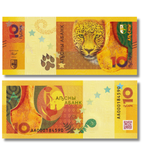
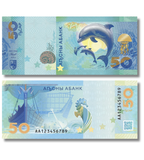
Rider of the "Kiaraz" detachment: The "Kiaraz" detachment was one of the first Abkhazian revolutionary formations that operated after the February Revolution of 1917. It participated in the struggle against Georgian troops in 1918–1921 and contributed to the establishment of Soviet power. Traditional estate and hawk: Reflect Abkhazian folk architecture and the nature of the Caucasus. Seven stars: Repeated on both sides and are a traditional design element of Abkhazian banknotes. QR code: A modern element that allows obtaining additional information about the banknote. Significance for collectors and Abkhazia Like previous commemorative issues (for example, the 10 apsars of 2024 with a leopard or the 50 apsars of 2025), the new 200-apsar banknote is intended primarily for collectors and numismatists, not for mass circulation. It symbolizes the continuation of the National Bank's policy of promoting Abkhazian history and culture. The apsar denomination was introduced in 2008, initially as coins, and subsequently as banknotes. This issue emphasizes Abkhazia's desire to strengthen the symbols of sovereignty, despite limited international recognition.