
On September 14, 2026, the National Bank of Romania (Banca Națională a României, BNR) is issuing into circulation a new commemorative collector banknote with a face value of 100 lei, dedicated to Eugeniu Carada — the founder of the central bank itself. The occasion marks the 190th anniversary of the birth of this figure, without whom it is difficult to imagine the history of the Romanian monetary system.
Who Was Eugeniu Carada
Carada (1836–1910) entered Romanian history as a financier and public figure who stood at the origins of the creation of the National Bank of Romania. That is why the new banknote is not just another collection series, but a unique token of gratitude from the institution to its founder.
Banknote on Polymer
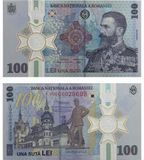
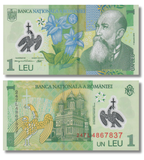
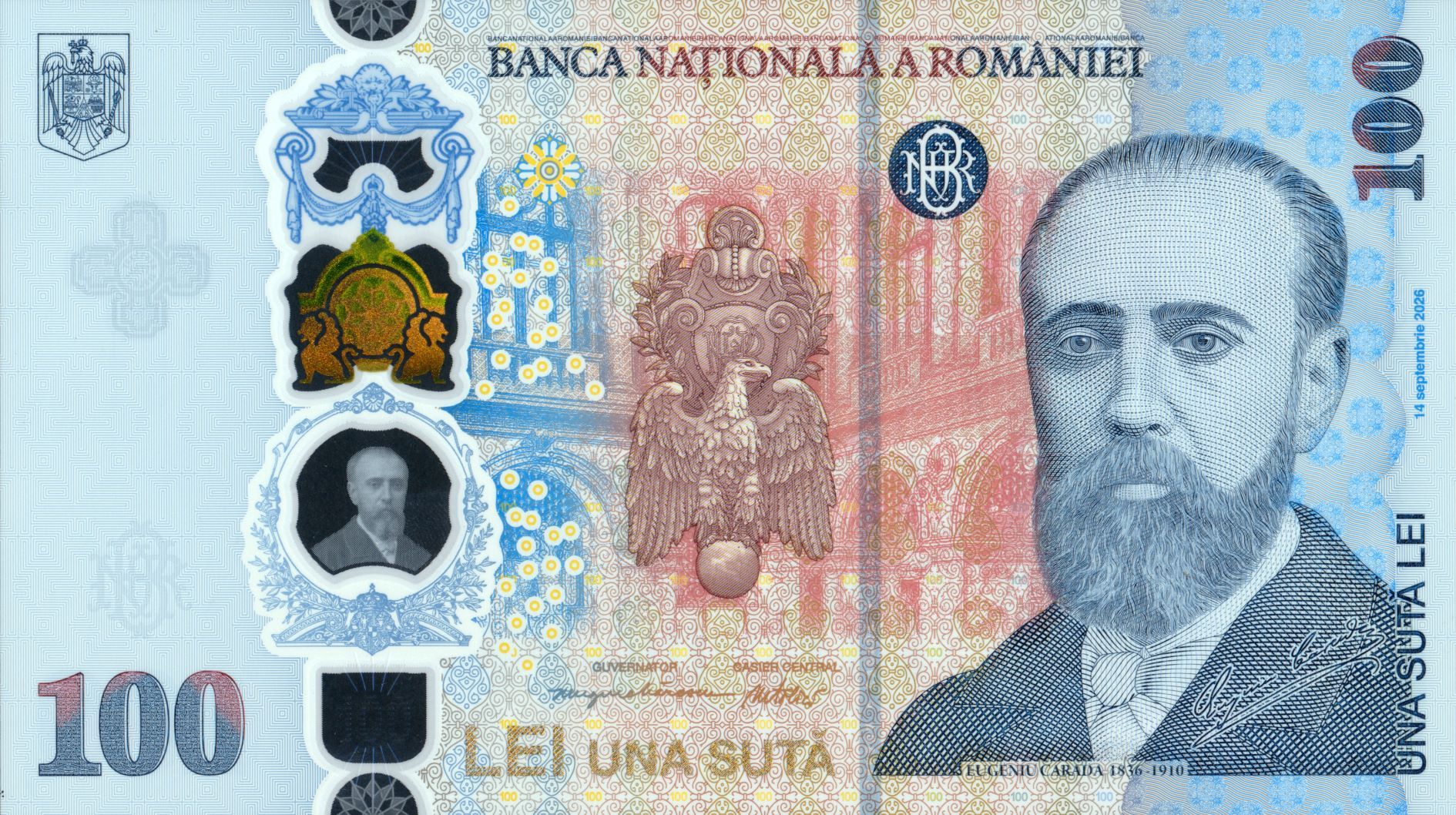
The new banknote with a denomination of 100 lei is printed on a polymer substrate — the same material as the current circulation banknote of the same denomination, and has an identical size: 147 × 82 mm (with a tolerance of ±1 mm). The dominant color is blue. The printing is combined offset and intaglio (recessed printing).
The obverse is decorated with a portrait and signature of Eugeniu Carada, below which the years of his life are indicated: "EUGENIU CARADA 1836-1910". The central part features an image of the Cashiers' Hall in the Old BNR Palace, superimposed on a detail depicting an eagle, with an ornamented shield bearing the bank's logo behind it. Also present are the coat of arms of Romania, the name of the central bank "BANCA NAȚIONALĂ A ROMÂNIEI", and the BNR logo in a medallion. The denomination is printed four times — in numerals and letters, in different corners of the banknote. The date of issue — "14 septembrie 2026" — is placed vertically on the right.
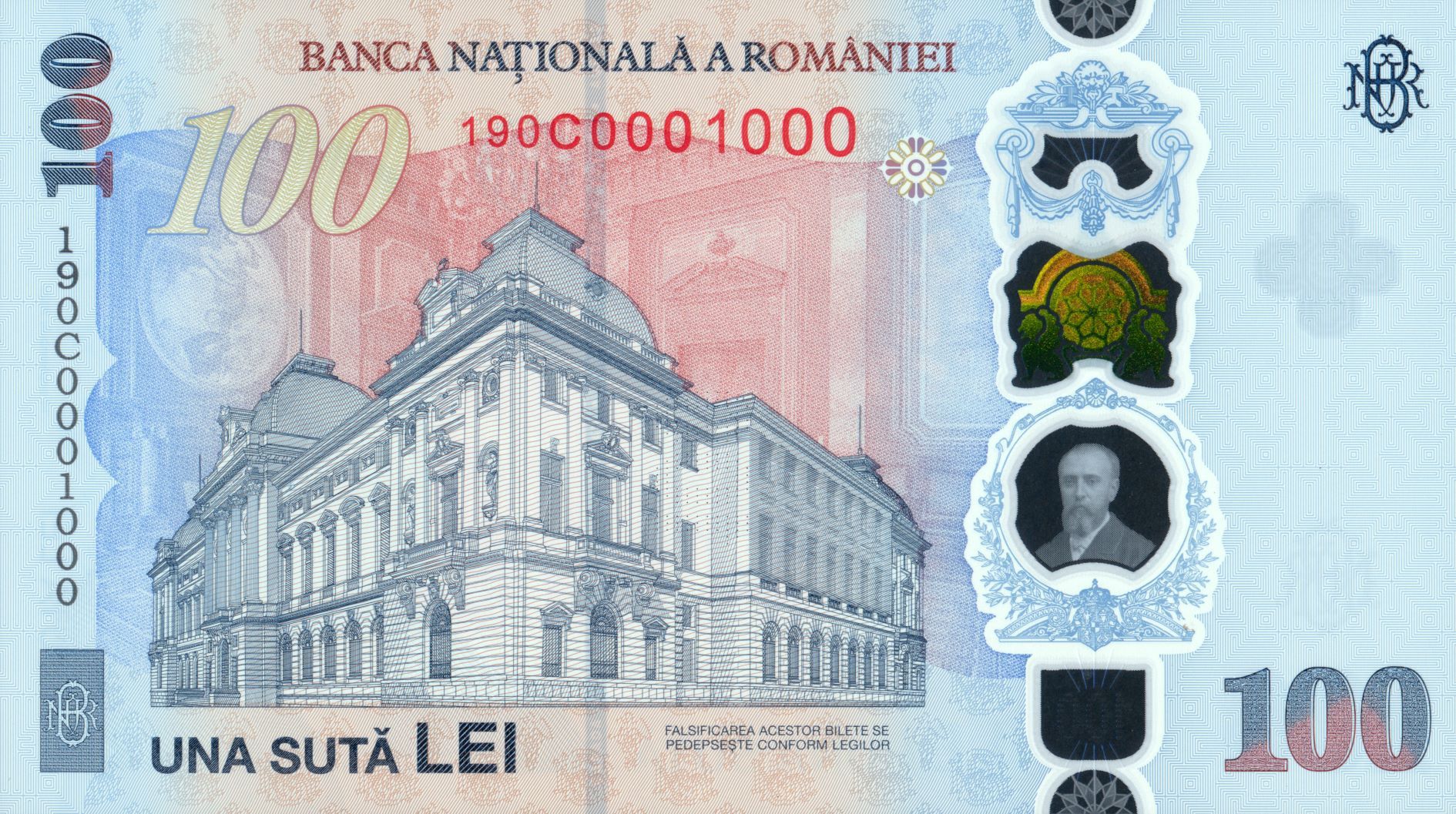
The reverse demonstrates an image of the Old BNR Palace and the Boardroom of the Bank's Council. A warning statement regarding criminal liability for counterfeiting banknotes is also printed here.
Counterfeit Protection — At the Highest Level
The banknote features a full range of security elements characteristic of modern polymer banknotes:
-
A transparent window with a complex multi-tone cameo portrait of Carada and a stylized element referring to the first 20 lei banknote issued by the BNR in 1881. Inside the window is a graphic element that glows yellow and blue under ultraviolet light (Vivid Colour).
-
Two watermarks — an image of the "Crossing of the Danube" order, awarded to Carada by King Carol I, and the BNR logo.
-
A magnetic security thread with the microtext "CARADA" in negative image, readable in four directions.
-
OVMI-ink SPARK® above the portrait, which changes color from gold to green when the banknote is tilted.
-
Embossed tactile printing — the portrait, coat of arms, bank name, and denomination are tactile to the touch.
-
A see-through register image combining the obverse and reverse sides into a single complete picture when held to the light.
-
Laser microperforation of the "100" denomination in the central section.
-
A hidden (latent) image with the lettering "BNR" over the illustration of the Old Palace.
-
Additionally — microtexts visible only with special devices, as well as elements that change color under ultraviolet light.
Mintage / Issue Volume
The approved mintage is 16,000 individual banknotes and 1,000 special sheets, each containing four 100 lei banknotes. Each individual banknote is enclosed in a presentation booklet with a description in three languages — Romanian, English, and French. The special sheet of four banknotes is accompanied by a certificate of authenticity. Both options are supplied in branded envelopes.
Despite its collector status, the new banknote is legal tender within the territory of Romania.
Coming Soon to Your Collection
The World Banknote Store team is already working on adding this banknote to the catalog — as soon as it becomes available, you will be able to place an order directly on the website, and a rare commemorative banknote featuring the portrait of the founder of the National Bank of Romania will join your collection quickly and effortlessly.