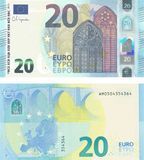
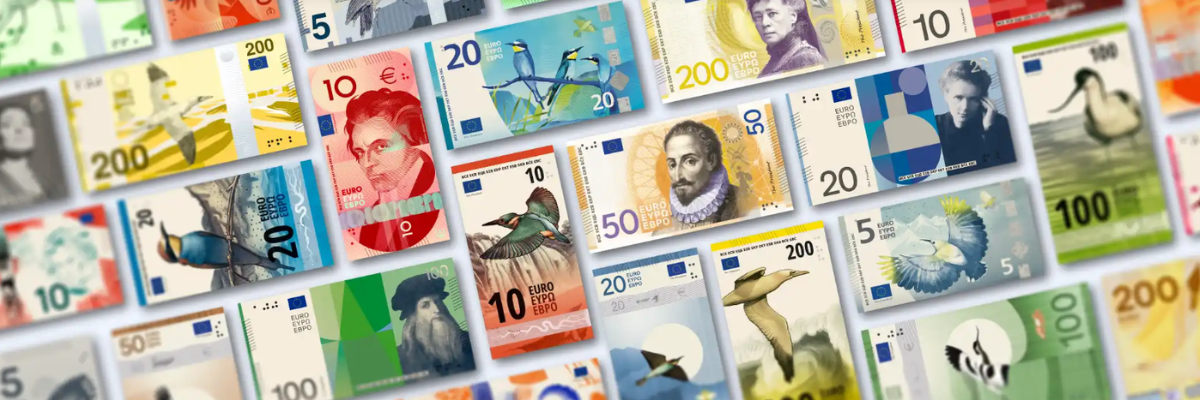
On July 23, 2026, the European Central Bank officially unveiled ten final design proposals for the new series of euro banknotes. This is the first complete redesign of the common currency notes since their introduction in 2002. Two themes—"European Culture" and "Rivers and Birds"—have already been selected, the motifs approved, and a large-scale public survey is now underway. Until September 21, everyone can influence what the money in our wallets will look like in a few years. Old banknotes will not disappear suddenly—they will remain in circulation in parallel and retain their value forever.
Why the euro needs a new look right now
The first series of euro banknotes appeared more than 24 years ago. The second ("Europa") began entering circulation in 2013. Central banks around the world regularly update money design—usually once every 10–15 years. The reasons are simple and pragmatic: counterfeiting technologies do not stand still, and society is changing. The ECB directly names several goals for the new design:
-
to make banknotes significantly more difficult to counterfeit;
-
to increase accessibility for people with visual impairments;
-
to reduce the environmental footprint of production;
-
to make money feel more "their own" for Europeans of all ages, backgrounds, and cultures. "Euro banknotes are more than just a means of payment. They are one of the most tangible symbols of Europe," said ECB President Christine Lagarde during the presentation on July 23.
How themes and motifs were chosen: from focus groups to 365,000 votes
The process began as early as late 2021. First, qualitative research was conducted in focus groups, followed by large-scale surveys. Over 365,000 Europeans expressed their preferences regarding potential themes. Strong support was received by culture, rivers, and birds. In November 2023, the ECB Governing Council approved two final themes:
-
"European Culture"—shared cultural spaces and prominent Europeans whose lives and work crossed borders.
-
"Rivers and Birds"—nature without borders, a symbol of freedom, unity, and environmental responsibility. In January 2025, specific motifs were approved. Here is how they were distributed: Theme "European Culture"
-
€5 — Maria Callas + street performers
-
€10 — Ludwig van Beethoven + song festival
-
€20 — Marie Curie + school/university
-
€50 — Miguel de Cervantes + library
-
€100 — Leonardo da Vinci + museum
-
€200 — Bertha von Suttner + public square Theme "Rivers and Birds"
-
€5 — mountain spring + wallcreeper
-
€10 — waterfall + kingfisher
-
€20 — river valley + European bee-eater
-
€50 — winding river + white stork
-
€100 — river mouth + pied avocet
-
€200 — sea + northern gannet On the reverse side of the "bird" series, buildings of European institutions will appear—from the European Parliament to the Court of Auditors.
A competition involving designers from across Europe
In July 2025, the ECB announced an open competition. 1,241 applications were received from graphic designers from all EU countries. 25 participants were selected, who prepared full design series for all six denominations by the end of April 2026. An independent jury of 21 experts (one from each national central bank in the euro area) evaluated 39 proposals and selected the 10 best—five for each theme. These ten options are currently being shown to the public. Important: in the public survey, the designs are marked only with letters A–J, without the authors' names. This was done deliberately so that people evaluate the visual solution itself, not the reputation or nationality of the designer.
What happens next and when we will see the new banknotes in our wallets
The public online survey runs until September 21, 2026 (23:59 CET). In parallel, an independent sociological company is conducting a representative survey among residents of the euro area. Tentatively at the end of 2026, the ECB Governing Council will make a final decision. Next, technical refinement, testing of security features, and preparation for production will begin. The banknotes themselves will enter circulation only in a few years—the exact date has not yet been announced. Important guarantees from the ECB:
-
denominations will remain the same (€5, €10, €20, €50, €100, €200);
-
sizes and primary colors will likely not change (so as not to break ATMs and sorting machines);
-
old banknotes will remain legal tender and will be exchangeable at national central banks indefinitely.
Why this is more than just a new drawing
Money is one of the most ubiquitous items encountered by hundreds of millions of people every day. It lies in pockets, passes through the hands of merchants, cashiers, and collectors. Therefore, the ECB deliberately makes the process as open as possible: first hearing people's opinions on themes, then on motifs, and now on specific designs. The new series aims to be not just beautiful, but also more environmentally friendly, secure, and convenient for everyone, including people with disabilities. Official materials, images of all ten proposals, and a link to the survey can be found on the ECB website in the Future banknotes section. The euro is preparing for a new chapter in its history. And this time, it can be written not only by bankers and designers—but by ordinary Europeans as well.
Vitalii Cherniuk - CEO World Banknote Store